The Magic of Darkness Retreat: When the Light Bulb Goes Off
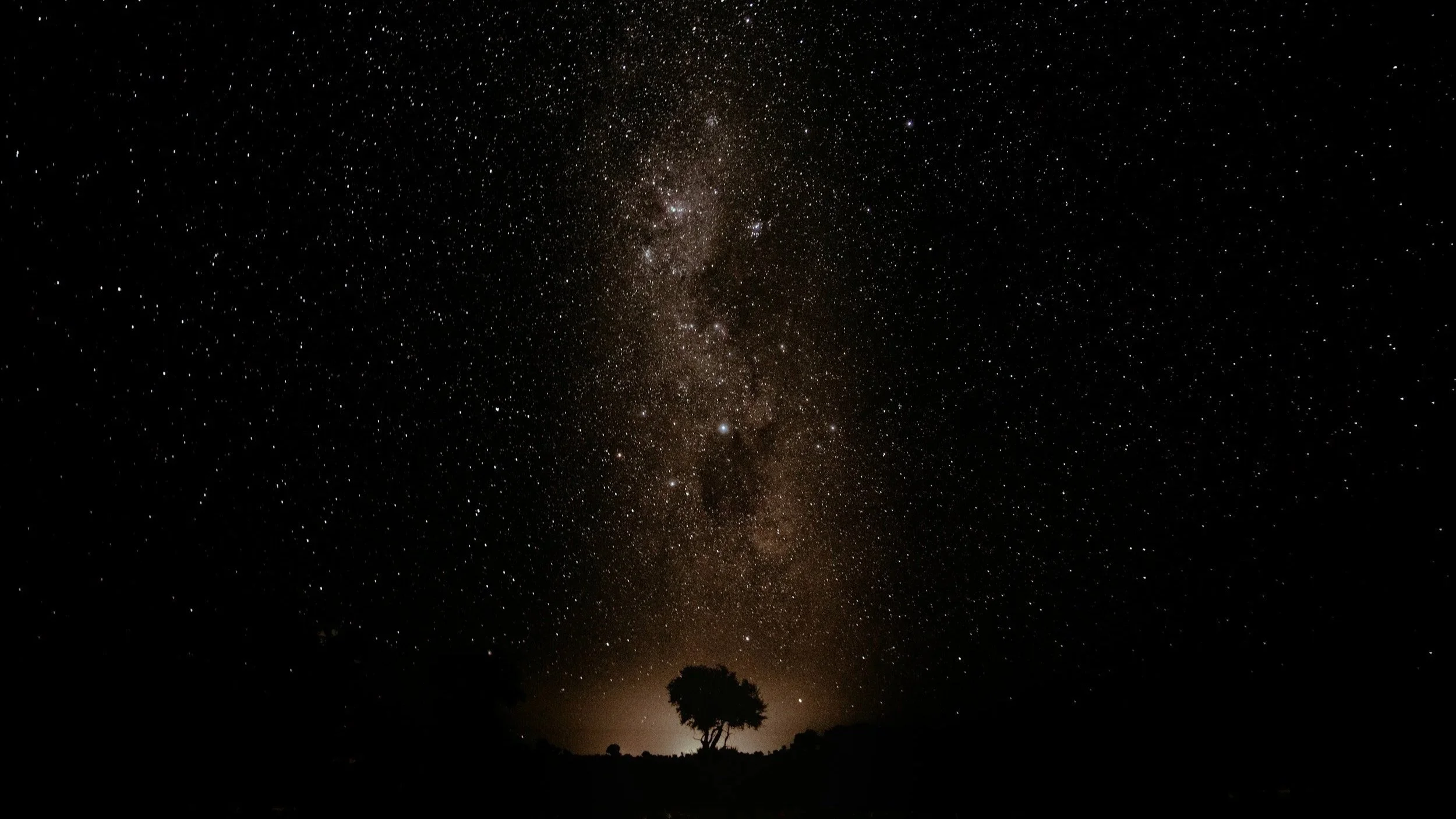
I recently spent seven days in an intensive training with Andrew Holecek exploring darkness retreat: why humans have intentionally entered darkness for centuries, what happens when we remove ourselves from our ordinary sensory world, practices that support deep meditation in the dark, and what darkness can reveal about the way we experience ourselves and the world around us.
Andrew, a profoundly gifted writer and speaker, provides a darkness framework that includes everything from the science to the practical to the mystical. I came away with pages of notes and plenty of new information. But more than that, I came away with a deeper appreciation for something that is becoming increasingly rare in modern life: the opportunity to stop orienting ourselves outward. Most of our lives are built around doing and then we define ourselves by it. This is who I am: the human-doing.
We wake with the light. We check our phones. We answer messages. We work, exercise, drive, plan, solve problems, care for other people and move toward the next thing that needs our attention. Even our attempts at rest often contain stimulation—television, podcasts, books, social media or conversation.
Our attention is constantly being pulled outward. Darkness retreat reverses that direction.
Getting Current With Reality
One idea I walked away with from this training was the idea of getting current with reality.
We carry so much unfinished material. Old conversations. Expectations. Identities. Regrets. Stories about ourselves and other people. Plans for what comes next. Experiences we may have moved past chronologically but haven't necessarily metabolized internally.
When much of our usual stimulation disappears, there is nowhere else we need to be and remarkably little we need to do.
Eventually, we begin meeting what is actually here.
At first, that may simply be exhaustion.
One of the things I appreciate about darkness retreat is that it doesn't have to begin as a heroic spiritual endeavor. Sometimes what a person needs most is to sleep. Without daylight telling the body it is time to get up, appointments waiting, or a phone within reach, the system is finally given permission to rest.
And that rest can be profound. But as the retreat continues, another kind of seeing can begin.
Entering Plato’s Cave: Seeing Our Projections
We don't experience the world exactly as it is. We experience it through our history, expectations, fears, desires and conditioning.
In other words, we project.
We assume someone's expression means something about us. We anticipate how a conversation will go. We decide what another person thinks. We interpret an experience through the lens of everything that has happened before it.
And because the external world is always giving us something to react to, it can be difficult to recognize how much of our experience is being generated internally.
Darkness removes the screen we normally project upon.
There are no external objects demanding interpretation, and little to no social interactions reinforcing our familiar roles. We may begin to notice the stories we continuously create—and perhaps recognize that some of what we thought belonged to the world outside us actually originated within us.
This doesn't mean darkness magically resolves everything. It creates the conditions in which we may be able to see more clearly.
And sometimes seeing is the beginning of change.
Darkness- invitation to Deep Yin
As an acupuncturist, I can't help but think about darkness through the lens of Chinese medicine.
Darkness is profoundly Yin.
Yin is associated with darkness, night, stillness, inwardness, receptivity, quiet and restoration. Yang is associated with daylight, activity, movement, outward expression and doing.
Neither is better than the other. We need both.
But modern life has become extraordinarily Yang.
Lights allow us to extend daytime late into the night. Technology keeps information arriving around the clock. Productivity is rewarded. Busyness can become a badge of honor. Even wellness can become another list of things we are supposed to accomplish.
Exercise more. Meditate more. Track more. Optimize more.
There is always something else to do.
From the perspective of Chinese medicine, health doesn't come from eliminating Yang. It comes from relationship and movement between Yin and Yang. Activity needs restoration. Expression needs receptivity. Day needs night.
Darkness retreat creates an unusual opportunity to move deeply toward the other side of that equation.
There is nothing to accomplish in the darkness.
There is no audience.
There is very little external feedback.
Instead of constantly directing our attention toward the world, we allow it to return inward.
What Happens When We Stop Doing?
This may be one of the most interesting questions darkness retreat asks.
Who are we when we aren't doing anything?
When we aren't working, producing, caring for someone, improving ourselves, responding to messages or maintaining the identity we've built in the world—what remains?
Initially, that amount of space can feel unfamiliar.
But given enough time, something else may emerge: creativity, emotion, memories, insight, dreams, boredom, resistance, peace, grief, clarity, or simply an enormous need for sleep.
There isn't one correct darkness retreat experience.
That is part of its beauty.
The darkness isn't necessarily giving us something new. Often, it is allowing us to notice what was already there but difficult to hear beneath the noise of ordinary life.
Turning Off the Lights
The irony isn't lost on me that we use the phrase "the light bulb went off" to describe insight.
We associate understanding with illumination. We want to shed light on our problems, bring things into the light and finally see the answer.
But perhaps there are things we can only see when the lights go out.
Sometimes clarity comes from looking harder.
And sometimes it comes from removing what we have been looking at.
That is part of what continues to draw me to darkness retreat—not as an escape from life, but as a temporary withdrawal from its constant demands. We step away so that we can listen differently, rest more completely, notice our projections, get current with ourselves and eventually return to the world with a little more awareness of what we are bringing into it.
The practice of darkness retreat has become meaningful enough to me that my husband, James, our friend Jacob, and I now facilitate darkness retreats together in Colorado. We create a supported environment where participants can step away from ordinary life and spend several days in complete darkness, with daily support, meals provided and space for the experience to unfold in its own way.
I don't think darkness retreat is about finding one great revelation or having some extraordinary experience, though sometimes that is the case.
Sometimes the light bulb that goes off is much quieter than that.
It may simply be realizing how tired you are.
Recognizing a story you've been carrying for years.
Seeing a projection for what it is.
Remembering what it feels like not to be productive.
Or discovering that underneath all the movement and noise, there is a part of you that has been waiting patiently for enough quiet to finally be heard.
Sometimes we don't need more light.
Sometimes we need enough darkness to see what has been there all along.